In this project, I worked with a highly motivated team called Arktik Kirkle. What began as a group of three gradually grew into an eleven-member team with diverse cultural and professional backgrounds. Together, we launched the demo version of Cortex Protocol on Steam in April 2018.
PRODUCT
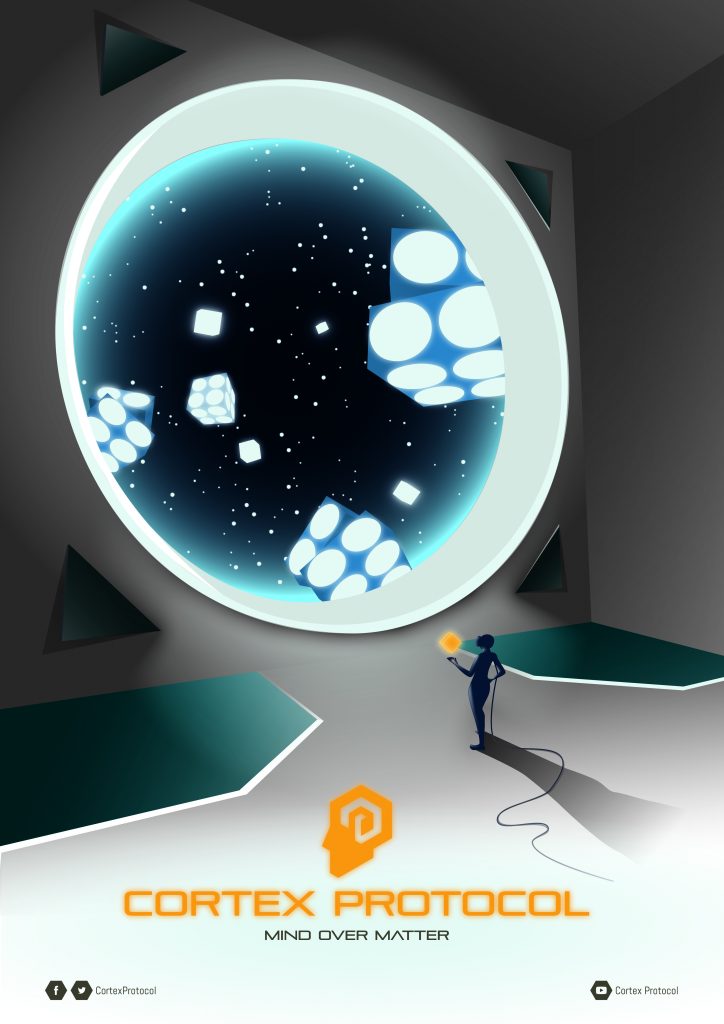
Cortex Protocol is a puzzle-focused VR game in which players navigate maze-like environments built inside Rubik’s Cube–shaped worlds, all while avoiding deadly traps and solving intricate puzzles. This project was part of my interactive design specialization during my Erasmus studies in Oulu, Finland, where I spent nine months working in the Game Lab at Oulu University of Applied Sciences.
GOALS
Successfully built a VR game from scratch in a nine-month production cycle, working in a competitive environment alongside multiple other game teams.
ROLE
UI Designer, Concept Artist, Graphic Designer
DURATION
9 months
PLACE
Oulu Game LAB, Finland
IDEATION / CONCEPT CREATION
The project began with pitching several game ideas within the team and selecting one that best matched our criteria:
It had to be deliverable within nine months.
The concept needed a strong selling point.
And most importantly, it had to be fun.
After choosing the concept, we refined it further, set clear goals for the game, and defined what each team member aimed to achieve during development. We then distributed roles across the team. I joined the sub-team responsible for visual design, creating 2D assets, and later making the UI.
RESEARCH & ART DIRECTION
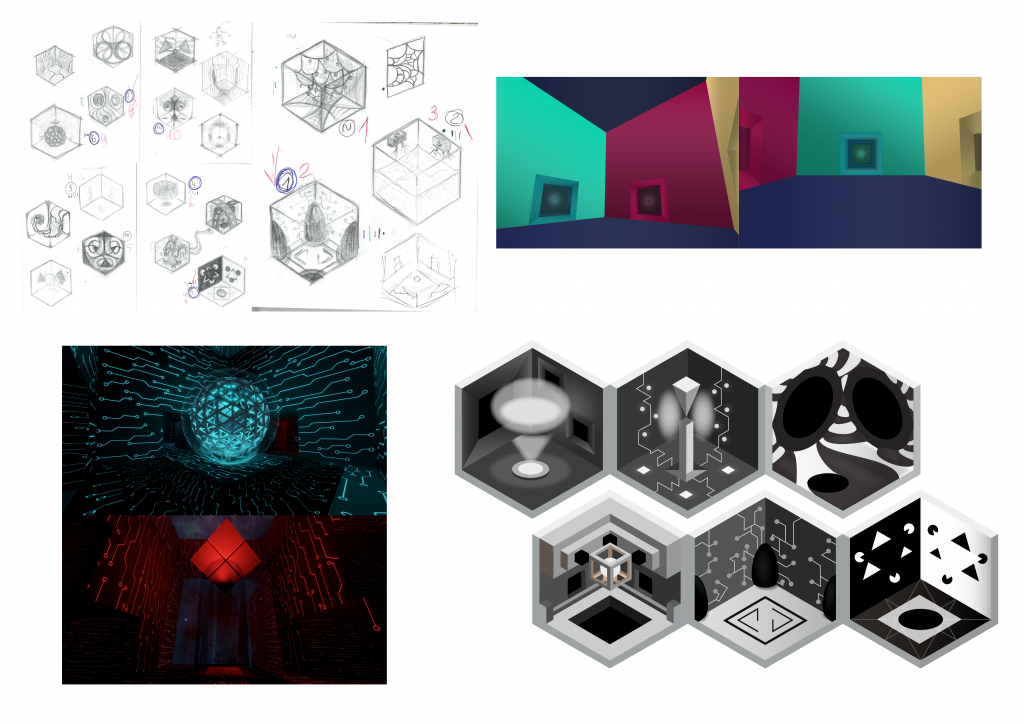
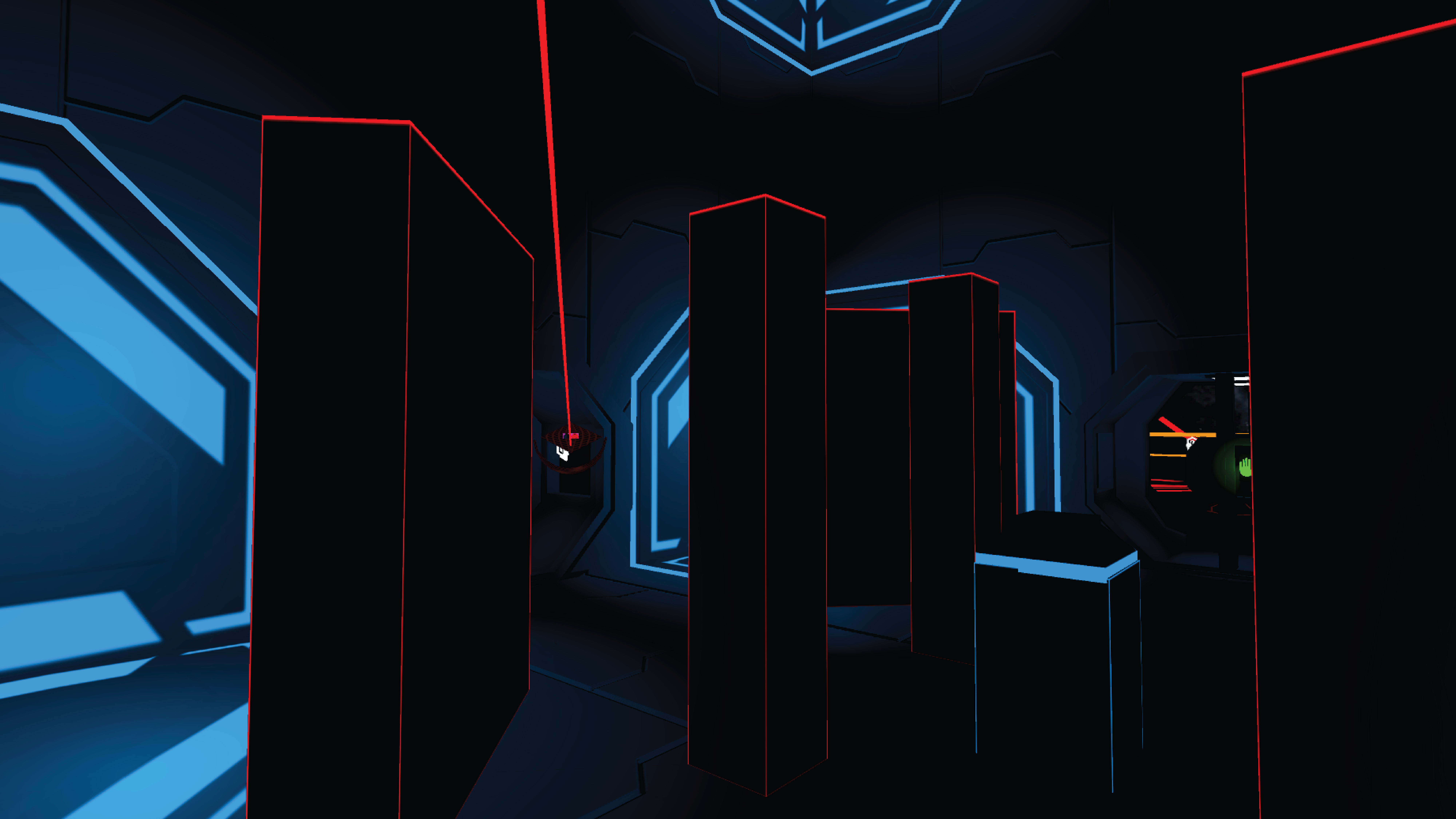
The core focus of Cortex Protocol is the synthesis of puzzle-solving and environmental design, placing the player inside a Rubik’s Cube with puzzles positioned throughout its structure. With this direction in mind, I analysed VR games within the same genre to determine an appropriate visual style. Since most titles at the time used a geometric, low-poly aesthetic, we decided to follow this approach. It was not only time-efficient and convenient but also beneficial for performance and helped reduce the risk of motion sickness for players.
At the end of this phase, all team artists collaborated to create an Art Bible—a comprehensive guideline document covering typography, colour palettes, promotional material standards, software settings for 2D vector graphics and 3D modelling, file-exporting rules, and more.
REFLECTION
Working in a team of twelve, each member coming from different cultural and professional backgrounds, was both challenging and incredibly rewarding. This experience taught me several important lessons:
Stand by the design decisions you believe in, while recognising that the final product is the result of everyone’s best ideas combined.
Define a realistic scope and project direction early on—quality over quantity.
Ensure close collaboration between Game Designers and UI designers from the very beginning to maintain clear communication throughout the process.
When working with non-designers, communicate the importance of the design process and the reasoning behind decisions as clearly as possible.
And most importantly: don’t be afraid to make mistakes. They are a vital part of everyone’s learning process.